
Starting university in Melbourne is an exciting new chapter. But moving to a new city, especially as a student, can feel overwhelming. Between finding a place to live, booking Melbourne removalists, and packing your things, there’s a lot to plan before semester begins.
This article answers your common questions about moving to Melbourne as a student. It covers the best student areas and practical tips to help you settle in easily.
Table of contents
- Popular student accommodation in Melbourne
- Best places to live in Melbourne for students
- How to choose the right suburb as a student
- Cost of living in Melbourne for students
- Local tips about Melbourne
- Final thoughts
- FAQs about moving to Melbourne as a student
1. Popular student accommodation in Melbourne
Melbourne City has options to suit all budgets and lifestyles.
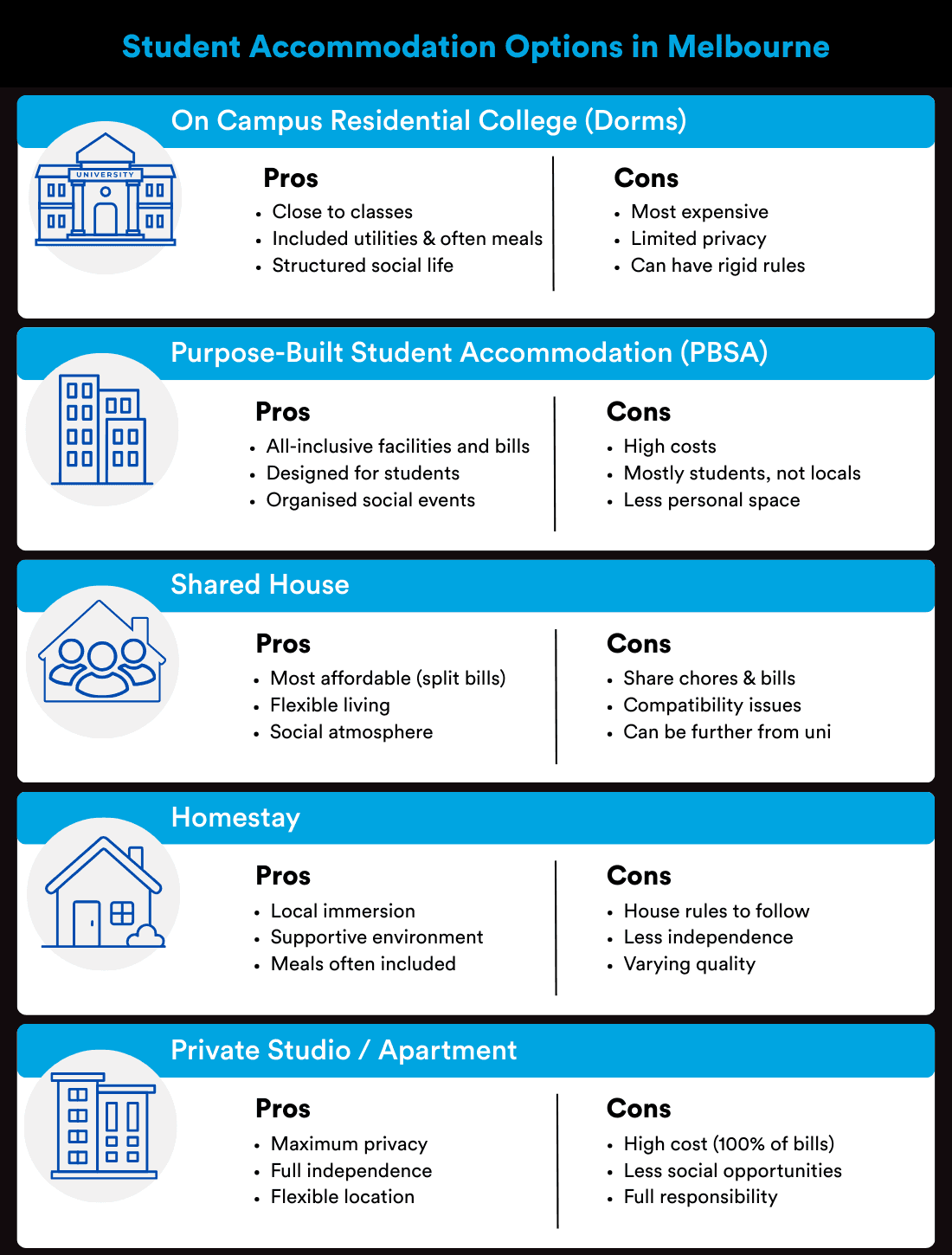
On-campus residential colleges (Dorms)
The traditional “university experience”, located on or next to university grounds. Not all universities offer dorms.
Typically includes furnished rooms, shared kitchens or catered meal plans, and organised social programs.
Costs: $260–$880/week. Price varies widely depending on university and college.
Best for: First-years and exchange students wanting instant community.
Purpose-Built Student Accommodation (PBSA)
Modern apartments designed specifically for students, usually close to campus. Fully furnished with bills included.
Common features:
- Study rooms and communal lounges
- Gyms and social spaces
- Student-only environment
- Flexible lease options
Popular providers: Scape, UniLodge, Iglu, Student Village, Urbanest, Journal Campus House, plus university-managed options.
Costs: Shared Rooms/apartments $340–$600 per week. Private Studios: $470–$800+ per week.
Price depends on provider and location (more expensive closer to the uni)
Best for: Students that want convenience, security and community.
Shared houses
Rent a room in a house shared with other residents or students.
Costs: $200–$400/week
Best for: Cheaper accommodation and independence outside of the uni bubble.
Homestay
Live with a local host family. Often includes furnishing, utilities and some meals.
Costs: $310–$460/week.
Best for: International students or those who want a quieter, supportive environment.
Private studio or one-bedroom apartment
Fully independent living. You’re responsible for all rent, utility bills, and cleaning.
Cost: $400–$600 per week.
Best for: Students who want space, quiet and control over their living environment.
Tips for choosing Melbourne student accommodation:
- Check travel time to campus (tram, train, bus routes).
- Review what’s included (internet, utilities, furnishings).
- Check lease terms and bond requirements.
- Think of the lifestyle you want: social, independent, or family-style.
The right accommodation can make a huge difference in your Melbourne experience. It can help determine how you meet new people and build a new community.
2. Best places to live in Melbourne for students
The table below breaks down the most popular suburbs for each major university in Melbourne.
| University | Popular Student Suburbs | Why? |
|---|---|---|
| University of Melbourne | Carlton, Brunswick, CBD | Walking distance, strong student community |
| RMIT (City) | CBD, Fitzroy, Brunswick | Central location, easy tram and train station access |
| Monash University (Clayton) | Clayton, Huntingdale, Notting Hill | Strong student housing supply |
| Deakin University (Burwood) | Burwood, Box Hill | Tram 75 access, quieter residential areas |
| Swinburne University (Hawthorn) | Hawthorn, Glenferrie, Richmond | Walking distance, vibrant student strip |
| La Trobe (Bundoora) | Bundoora, Kingsbury, Reservoir | Affordable housing next to campus |
Keep in mind that even nearby suburbs can differ. Near the University of Melbourne, a one-bedroom unit in Carlton rents for around $415/week (5–10 minutes walk to campus), while Brunswick is around $480/week, a 14-minute tram ride away.
Living further out will always save you money — it's worth checking the latest prices.
3. How to choose the right suburb as a student
Balance rent with commute time
Factor in weekly rent, transport, groceries, and social life costs. A direct tram or train line is usually better than a cheaper suburb with multiple transfers.
Think about lifestyle
Inner-city areas like Carlton or Brunswick are busier and more social. Outer suburbs are quieter and often more affordable.
Check access to essentials
Supermarkets, libraries, study spaces, and late-night food spots matter more than you think.
Choose your community
Areas full of other students can make it easier to make friends and settle in.
4. Cost of living in Melbourne for students
Melbourne is one of Australia’s most expensive cities to live in, so it’s important to plan your budget carefully. Living costs depend on your lifestyle and whether you’re studying domestically or internationally. Here’s a realistic estimate of weekly expenses for students.
| Category | Typical Weekly Cost | Notes |
|---|---|---|
| Rent | $200–$600 | Shared: $200–$350 | Studio: $400–$600 |
| Utilities | $30–$50 | Often included in PBSA or split in shared houses |
| Groceries | $70–$100 | Save by shopping at local markets or discount supermarkets |
| Public transport | $20–$50 | Apply for a student Myki concession card |
| Dining out | $50–$80 | Casual dining are popular among students. |
| Mobile / SIM | $10–$30 | Use prepaid or student-friendly plans. |
| Entertainment / social | $100–$150 | Movies, gyms, sports, and social events. |
| *Prices are indicative only and may vary depending on suburb, provider, lifestyle and market conditions. | ||
5. Local tips about Melbourne before your move
Melbourne apartments are small
Melbourne CBD has a dense population. You may need temporary storage in Melbourne to hold any items that don’t fit in your home.
Read our complete guide on moving to a Melbourne CBD apartment for more info.
Trams are everywhere, but not always fast
Melbourne’s tram network is reliable and you can get student concessions for them. But they can be slow during peak hours. Walking, e-biking, or catching buses can be quicker if you’re in a hurry.
Safety differs by area
Melbourne is generally safe, but some areas are busier at night. Research your neighbourhood and plan late-night commutes.
Universities have strong student services
Universities offer clubs, counselling, gyms, and social events. Joining a society is a great way to meet people and feel part of the community.

6. Final thoughts
Moving to Melbourne as a student is the start of an exciting adventure. You can make your transition even more enjoyable by choosing the right accommodation in Melbourne, understanding the city, and embracing student life.
As Melbourne-based removalists, we see peak student moves in February and July, just before semester starts. If you're moving from another state, plan your move early and book reliable interstate removalists. They’ll help avoid the peak and ensure your belongings arrive safely.
7. FAQs about moving to Melbourne as a student
How much should a student budget per week in Melbourne?
You may expect to spend $450–$1,000 per week. This covers:
- rent ($200–$600)
- groceries ($70–$100)
- transport ($20–$50).
Costs vary based on your lifestyle and accommodation.
What is the best suburb for students in Melbourne?
It depends on your university. Carlton and Brunswick are best for The University of Melbourne or RMIT. Clayton is good for Monash University. Hawthorn is great for Swinburne University, and Bundoora for La Trobe University.
Is public transport free for students in Melbourne?
Only within the CBD Free Tram Zone. For all other travel, full-time students get 50% off their Myki fares. As of 2026, those under 18 travel free on all Victorian public transport.
Is it hard to find a rental in Melbourne right now?
It can be. Melbourne’s vacancy rate is around 1.7% (February 2026), so competition is tight. Start looking a few months early and have your documents ready to submit straight after inspections.